










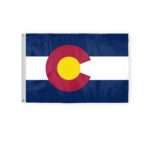


Flag Features
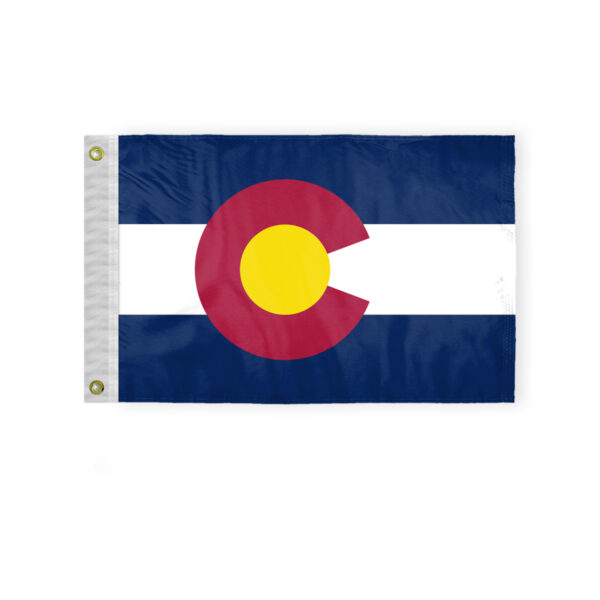
200D nylon at the compact display size — altitude-rated dye-sublimation fade-proof color, corrosion-resistant brass grommets, all-weather durability across Colorado’s full climate range
200D Nylon
200 denier nylon is the outdoor flagpole standard weight — and at Colorado’s altitude it is the minimum correct specification. At Denver’s 5,280 feet UV intensity is 25% higher than at sea level, accelerating surface-print degradation on polyester alternatives. 200D nylon accepts dye-sublimation color at depth that keeps Colorado’s blue, white, gold, and red vivid through altitude UV, temperature cycling, and Front Range Chinook wind exposure.
Dye-Sublimation Color
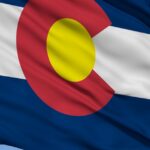
Colorado’s gold C outline, deep blue stripes, and red field are driven into the nylon fiber by dye-sublimation — not surface-printed on top of it. Color in the fiber cannot peel, flake, or wash off under Colorado’s outdoor conditions. A surface-printed polyester flag in Breckenridge or Aspen fades to indistinct pastels within a single Colorado season; dye-sublimated 200D nylon maintains full color saturation through multiple Colorado outdoor seasons.
Double Sided Reverse Print
A single nylon layer printed with dye-sublimation produces a full-color Colorado flag on the front face and a natural mirror image on the reverse at the same saturation depth. The C is mirrored on the reverse, as expected for any single-layer outdoor pole flag. Both faces display Colorado state identity clearly — from the front approach to your home, from the rear approach, from both sides of a marina dock.
Brass Grommets
Brass grommets set in reinforced header fabric are the correct hardware choice for Colorado’s flagpole environments. Chinook events along the Front Range produce sustained winds above 60 mph that stress grommet attachment points beyond what zinc and steel hardware can sustain without deforming or corroding. Brass resists corrosion in Colorado’s mountain humidity and temperature cycling, maintains clean appearance, and distributes hanging load to prevent pull-out through multiple Colorado seasons.
All-Weather Colorado
200D nylon performs across all of Colorado’s climate zones: Front Range urban with altitude UV and Chinook exposure, mountain resort communities with high-elevation UV and temperature cycling, Eastern Plains with sustained prairie wind, and Western Slope canyon locations with channeled wind and variable humidity. One flag material specification for the full range of Colorado outdoor display environments.
2×3 Ft Compact Format
The correct display size for residential flagpoles under 20 feet, porch bracket mounts, wall hardware, apartment balcony rails, boat flagpoles, and indoor display poles. Colorado’s flag 2:3 aspect ratio is maintained exactly — the C emblem is correctly sized and positioned relative to the stripes, not stretched or compressed to fit a non-standard panel. The compact format for the full official 1911 Colorado flag design at the correct proportion.
Why Choose Us
Color That Stays Sharp Through Colorado’s Full Outdoor Season — at Altitude
A polyester flag that fades to washed-out stripes by midsummer at 5,280 feet is not a cheaper version of this flag — it is a different outcome. 200D nylon with dye-sublimation is the specific material answer to Colorado’s altitude UV intensity and year-round outdoor display demands.
200D Nylon vs. Standard Polyester Alternatives
2×3 Ft · 200D Nylon · Dye-Sub · Brass Grommets
- 200D nylon — altitude-correct outdoor flagpole weight for Colorado display
- Dye-sublimation — color in the fiber; does not fade under Colorado’s elevation UV
- Fade proof — maintains blue, white, gold, and red through full Colorado seasons
- Brass grommets — Chinook wind load rated; corrosion-resistant in mountain humidity
- Double-sided reverse print — full-color Colorado flag on both faces
- Official 1964-codified Colorado design — correct C proportion and color spec
Polyester · Surface Print · Zinc Grommets
- Polyester — stiffer in light wind; less dye capacity; faster altitude UV degradation
- Surface print — color sits on fibers; bleaches rapidly at Colorado’s altitude
- Fades to indistinct pastels within one Colorado outdoor season at elevation
- Zinc or steel grommets — deform under Chinook wind load; corrode in mountain humidity
- Single-sided or low-quality bleed-through — C reduced on reverse
- Often incorrect Colorado flag proportions or off-color C emblem
| Feature | This 200D Nylon Flag | Generic Polyester Flag |
|---|---|---|
| Material | 200D Nylon — Altitude-Correct Outdoor Standard for Colorado | Polyester — Less UV-Resistant; Stiffer Weave; Faster Colorado Altitude Fading |
| Color Durability | Dye-Sublimation — Color in Fiber; Fade Proof at Colorado’s High-Altitude UV | Surface Print — Fades Visibly Within One Colorado Outdoor Season at Elevation |
| Grommets | Brass — Chinook Wind Load Rated; No Rust in Mountain Humidity | Zinc or Steel — Deforms Under Chinook Load; Corrodes in Colorado Mountain Environments |
| Double-Sided | Dye-Sub Reverse Print — Full-Color Colorado Flag on Both Faces | Single-Sided or Bleed-Through — C Emblem Reduced on Reverse Face |
| Wind Performance | Flies in Light to Moderate Wind — Correct Drape in Colorado’s Variable Mountain Breeze | Stiffer in Light Wind — May Not Open Correctly in Colorado’s Low-Wind Mountain Mornings |
| Colorado Design | Official 1964 Color Spec — Correct C Proportion and Color Accuracy | Often Off-Color C or Incorrect Stripe Proportions |
30-Day Satisfaction Guarantee
Return within 30 days for a full refund — no questions asked.
Ships Same Day
Orders before 2 PM EST ship same day — ready for your flagpole before the weekend.
Altitude-Rated Dye-Sub
Dye-sublimation color in the fiber — the only printing process that addresses Colorado’s high-altitude UV acceleration directly.
Official Colorado Design
The 1964-codified Colorado flag — correct columbine blue, snow white, red-rock red, and sunshine gold at correct 2:3 proportion.
Care & Maintenance
Keeping your Colorado nylon flag in condition through the outdoor season
-
Bring In During Chinook and Wind Events
Remove the flag during Chinook wind advisories and any sustained wind above 35 mph. Colorado’s Front Range Chinook events produce sustained winds of 40–80 mph that are beyond the design envelope of any outdoor flag — fly-edge fraying accelerates dramatically at these speeds regardless of construction quality. In mountain locations above 8,000 feet, afternoon thunderstorm buildups also produce sudden gusty outflow winds that can exceed 50 mph with little warning. Bringing flags in when severe weather threatens is the single most effective flag life extension practice in Colorado.
-
Washing
Hand wash or machine wash on gentle cycle in cold water with mild detergent. 200D nylon handles gentle machine washing without structural damage. Air dry fully before re-hanging. Colorado’s Front Range and I-70 mountain corridor accumulate road deicing chemical residue (magnesium chloride) on flags displayed near roadways — a periodic wash removes this residue before it affects the nylon weave and color over a Colorado winter and spring cycle.
-
Altitude UV Management
Colorado’s altitude UV is the most significant color degradation factor for any outdoor flag in the state. The dye-sublimation construction provides meaningful UV resistance relative to surface-print alternatives, but UV degradation eventually affects even dye-sublimated color over multiple seasons. Leaving a flag mounted on a stationary pole in direct Colorado mountain sun during periods when it is not actively being displayed — during extended trips away from a mountain property, for example — accumulates UV exposure without the benefit of airflow cooling during movement. Removing or covering the flag when a mountain property is unoccupied for extended periods is the most practical UV management practice for Colorado mountain home display.
-
Off-Season Storage
At the end of Colorado’s outdoor display season — or when a mountain property goes into winter storage — wash the flag, air dry completely, and store folded or rolled in a dry indoor location. Colorado’s low relative humidity (particularly on the Front Range and Western Slope) means mildew in stored nylon is less of a concern than in humid-climate states, but storage away from direct UV and petrochemical vapors in garages and storage units remains the correct approach. A plastic storage bag or clean fabric bag in a climate-controlled interior space is ideal for Colorado flag storage.
-
Grommet Inspection
Inspect the brass grommets and the reinforced header fabric at the start of each season and after any Chinook or severe wind event. Colorado’s Chinook events apply sudden, high-magnitude loads to grommet attachment points that can stress the header fabric even when the grommet itself is undamaged. Look for any elongation of the grommet hole, separation of the header fabric from the flag body, or fraying at the fly edge that has progressed more than an inch into the panel. Address before re-hanging for another Colorado season.
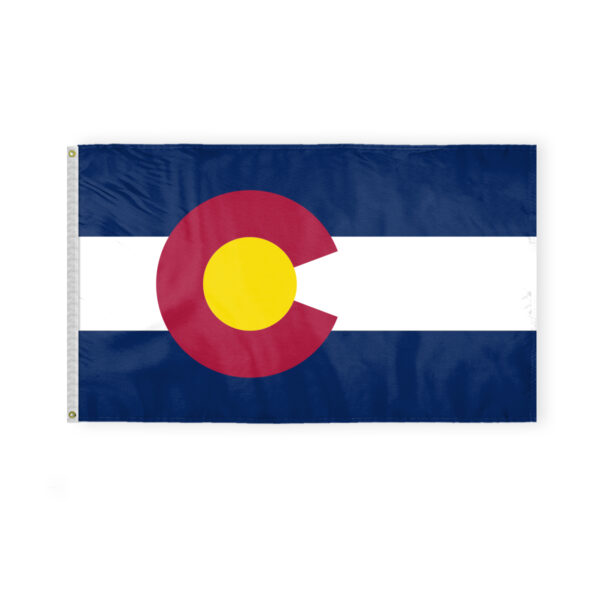
Need the standard flagpole size for a taller residential or commercial pole? The PromoPatriot Colorado State Flag 3×5 Ft is available in the same 200D nylon with brass grommets and stitched edges — the correct format for Colorado flagpoles from 20 to 40 feet.
Shop Colorado 3×5 Ft Standard Flag →Altitude-correct outdoor flagpole standard — dye-sublimation color in the fiber resists Colorado’s 25% higher UV at elevation versus sea level
Compact display format for poles under 20 ft, porch brackets, boat flagpoles on Colorado’s mountain lakes, balcony rails, and indoor poles
Chinook wind load rated — resists corrosion in Colorado mountain humidity and temperature cycling where zinc and steel grommets fail
Colorado admitted as the 38th state August 1, 1876 — the Centennial State, whose 1911 flag flies correctly at all elevations with this construction
Frequently Asked Questions
Everything you need to know about the PromoPatriot Colorado State Flag 2×3 Ft
Altitude affects flag material performance through one primary mechanism: UV radiation intensity. For every 1,000 feet of altitude gained, UV radiation increases by approximately 10% because there is less atmosphere to absorb it. Denver at 5,280 feet receives roughly 25% more UV than a sea-level city on the same day. Breckenridge at 9,600 feet receives approximately double the UV of a sea-level location. UV radiation is the dominant cause of color fading on outdoor flags. For surface-printed flags — where color sits on top of the fibers rather than being driven into them — this means Colorado flags fade at rates that would surprise flag owners accustomed to lower-altitude states. A polyester surface-printed flag that might last two seasons in Kansas or North Carolina may show significant fading within a single Colorado outdoor season at mountain elevation. The dye-sublimation process on this 200D nylon flag drives color into the nylon fiber at the molecular level, where UV degrades it dramatically more slowly than a surface print layer. This is not a marketing claim — it is the reason professional flag services specify dye-sublimated nylon for outdoor display at Colorado’s elevations.
The general guideline for flagpole-to-flag proportion is that the flag’s hoist (the height of the flag, the shorter dimension) should be approximately one-quarter to one-third of the flagpole height. For the 2×3 foot flag, the hoist is 2 feet. At one-quarter proportion, the correct pole height is 8 feet; at one-third, it is 6 feet. The practical display range for the 2×3 format is residential and commercial flagpoles from approximately 10 to 20 feet. At 10 feet, the 2×3 is at the upper end of the proportion range. At 20 feet, the flag is at the smaller end and begins to look modest. For Colorado mountain homes, where residential flagpoles are often in the 12–15 foot range to keep the flag below the roofline and away from mountain wind exposure, the 2×3 is the correct standard format. For taller poles, the 3×5 format is the correct specification. The proportion guideline applies regardless of whether the pole is in Denver, a Boulder neighborhood, a Steamboat Springs mountain property, or a farm on the Eastern Plains.
The 200D nylon construction and brass grommets are the correct material specification for Colorado’s Chinook environment, but it is important to be clear about what “correct specification” means at Chinook wind speeds. Chinook events along Colorado’s Front Range foothills corridor — from Fort Collins through Boulder, Denver, and Colorado Springs to Pueblo — regularly produce sustained winds of 40–80 mph and gusts above 100 mph in extreme events. No outdoor flag is designed for continuous display at these wind speeds. The 200D nylon is more durable than polyester at these conditions, and brass grommets resist deformation better than zinc and steel, but sustained exposure to 60+ mph wind will accumulate fly-edge fatigue on any flag. The correct approach in Colorado is to remove the flag during any Chinook advisory or sustained wind advisory above 35 mph. A flag that is consistently brought in during Chinook events will outlast a flag left flying through them by a factor of 3–5 in Colorado’s Chinook-exposed locations. For the typical Chinook event that runs 12–36 hours, a removal-and-rehang routine is practical and is the single most impactful flag care practice for Front Range Colorado residents.
Yes — and the 2×3 nylon format with brass grommets is specifically well-matched to Colorado’s mountain lake boating environment for reasons that go beyond standard marine flag specifications. Colorado’s reservoirs and mountain lakes — Lake Dillon at 9,017 feet, Horsetooth Reservoir above Fort Collins, Blue Mesa Reservoir on the Western Slope, Lake Granby in Grand County, and others — are freshwater venues without salt air corrosion concerns, which means the brass grommet specification is comfortably over-specified for the corrosion environment and will perform indefinitely. What Colorado’s mountain lake boats do face is high-altitude UV intensity — Lake Dillon at over 9,000 feet receives UV radiation approximately 90% above sea-level intensity. The dye-sublimation nylon construction directly addresses this. Mountain lake afternoon thunderstorms produce sudden, intense wind squalls that stress flag attachment points sharply — the brass grommets in reinforced header fabric handle this dynamic loading appropriately. The 2×3 format fits standard stern flagpole hardware on recreational boats from kayaks and sailboats to powerboats at Colorado’s mountain reservoirs.
The 2×3 foot and 3×5 foot versions share the same 200D nylon, dye-sublimation color, and brass grommet construction. The differences are size, stitching, and intended pole range. The 3×5 foot flag is the standard residential and commercial flagpole size — the format matched to 20–40 foot flagpoles and the recognized standard for outdoor flagpole display in Colorado. The 3×5 format also includes stitched edges on all four sides, which adds structural reinforcement for the larger panel area under wind load — this is particularly important in Colorado where Chinook events and mountain wind exposure generate higher absolute aerodynamic loads on larger flag panels. The 2×3 format uses a finished edge construction appropriate for its smaller panel area. The 2×3 is the compact size for smaller poles, bracket mounts, boat flagpoles, balcony hardware, and indoor display poles. Choosing between them: if your flagpole is under 20 feet, a bracket mount, a boat flagpole, or an indoor display pole, the 2×3 is correct. If your flagpole is 20 feet or taller, the 3×5 is the correct format.
Return within 30 days in original, unused condition for a full refund — prepaid return label provided. Defects in print quality, nylon construction, or grommet installation replaced free within 30 days — no return required on defective items. Normal wear from outdoor display in Colorado — gradual color fading after a full Colorado outdoor season including altitude UV exposure, fly-edge fraying from sustained wind exposure including Chinook events, minor nylon body softening from UV cycling at Colorado’s elevations — is expected product aging and not a manufacturing defect. Wind damage from display in conditions beyond the flag’s design envelope (sustained Chinook events above 35 mph, storm events) is not covered under the defect replacement policy.
 USA American Printed Flags
 USA Embroidered American Flags – Cotton
 USA Embroidered Ceremonial Flags With Gold Fringe
 USA American Printed Stick Flags
 USA American Patriotic Flat Flags
 USA Pleated Fan Flags
 USA Garden Flags
 USA Toothpick Flags
 USA Streamers
 USA Pull Down Flags
 USA Windsocks
 USA American Car Flags
 USA Official Sizes Embroidered Flags
 Alabama
 Alaska
 Arizona
 Arkansas
 California
 Colorado
 Connecticut
 Delaware
 District of Columbia
 Florida
 Georgia
 Hawaii
 Idaho
Idaho Indiana
 lowa
lowa Illinois
 Kansas
 Kentucky
 Louisiana
 Maine
Maine Maryland
 Massachusetts
 Michigan
 Minnesota
 Mississippi
 Missouri
 Montana
 Nebraska
 Nevada
 New Hampshire
 New Jersey
 New Mexico
 New York
 South Carolina
 North Carolina
 North Dakota
 Ohio
Ohio Oklahoma
 Oregon
 Pennsylvania
 Puerto Rico
 Rhode Island
 South Dakota
 Tennessee
 Texas
Texas Texas Sewn
 Utah
Utah Vermont
 Virgin Islands
 Virginia
 Washington
 West Virginia
 Wisconsin
 Wyoming
 Air Force
 Air Force Retired
 Coast Guard
 Coast Gaurd Retired Flags
 Navy
Navy U.S. Army
 U.S. Army Retired
 Support Our Troops – Camou
 Support Our Troops – Yellow
 Prisoners Of War Flags -Black
 Prisoners Of War Flags – Red
 Special Military Flags
 Civilian Flags
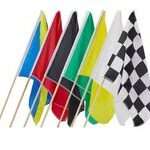 4X6 INCH Mini Racing Stick Flags
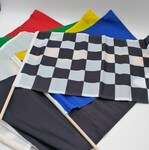 24X30 INCH Racing Flags
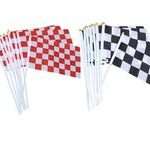 30X30 INCH Checkered Racing Flags
 Checkered Premium Car Flags
 Calico Jack Reckham Pirate Design
 Classic Jolly Roger Pirate Design
 Henry Every Pirate Design
 One Eyed Jack Pirate Design
 Pirate Hat Design
 Buddhist Flags
 Christian Flags
 Episcopal Flags
 Islamic Flags – Black Seal
 Islamic Flags – White Seal
 Israel- Zion Flags
 Jesus Fish Flags
 Lutheran Rose
 Methodist Flags
 Papal Flags
 Presbyterian Religious Flags
 United Church of Christ Flags
 Bow Pennants
 Code & Answering Pennant
 International Maritme Code Flags
 Message Flags
 Nautical Officers Flags
 Novelty Boat Flags
 Number Pennant
 Substitute Pennants
 Yacht Flags
 Numbered Golf Flags -Black Text On Yellow- Tube
 Numbered Golf Flags -Red Text On White- Tube
 Numbered Golf Flags -White Text On Red – Grommet
 Numbered Golf Flags -White Text On Red – Tube
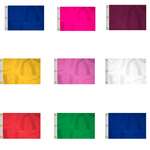 Plain Golf Flags With Grommets
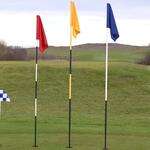 Plain Golf Flags With Tube
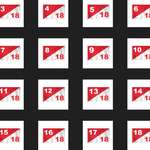 Semaphore Golf Flags -Numbers 1-18 – Tubed
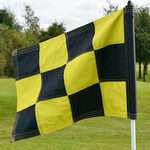 14X18 INCH Golf Direction Flags
 12″X18″ – 19th Hole Golf Flag
 Ecology Flag
 Blue Peace Flag
 15′ Universal Peace Streamers
 Earth Flag
 American Peace Flag
 Embroidered Peace Symbol Flags
 Peace Symbol Flags
 4″X6″ Historical Stick Flags
 First Navy Jack
 Betsy Ross Flags
 Bennington Flag
 Gadsden Flag
 Happy Valentines Day
 St Patricks Day
 Blank Flags
 Funeral Flags
 Halloween Flags
Reviews
There are no reviews yet.