




























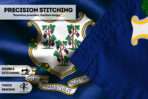

Flag Features
Marine-grade 200D nylon with 100% bleed-through reverse — the nautical construction standard for Connecticut’s Sound, river, and inland lake boating environments
200D Nylon — Nautical Standard
200D nylon is the marine-grade outdoor flag material standard for a specific reason: it is UV-resistant, non-absorbent (sheds water rather than saturating), and light enough to fly in the variable coastal and river breezes of Connecticut’s Sound and inland waters. Polyester absorbs water and UV-degrades faster at the water’s reflected-UV environment. 200D nylon is the correct material for Connecticut’s tidal Sound, Connecticut River, and lake boating environments.
100% Bleed-Through Reverse Print
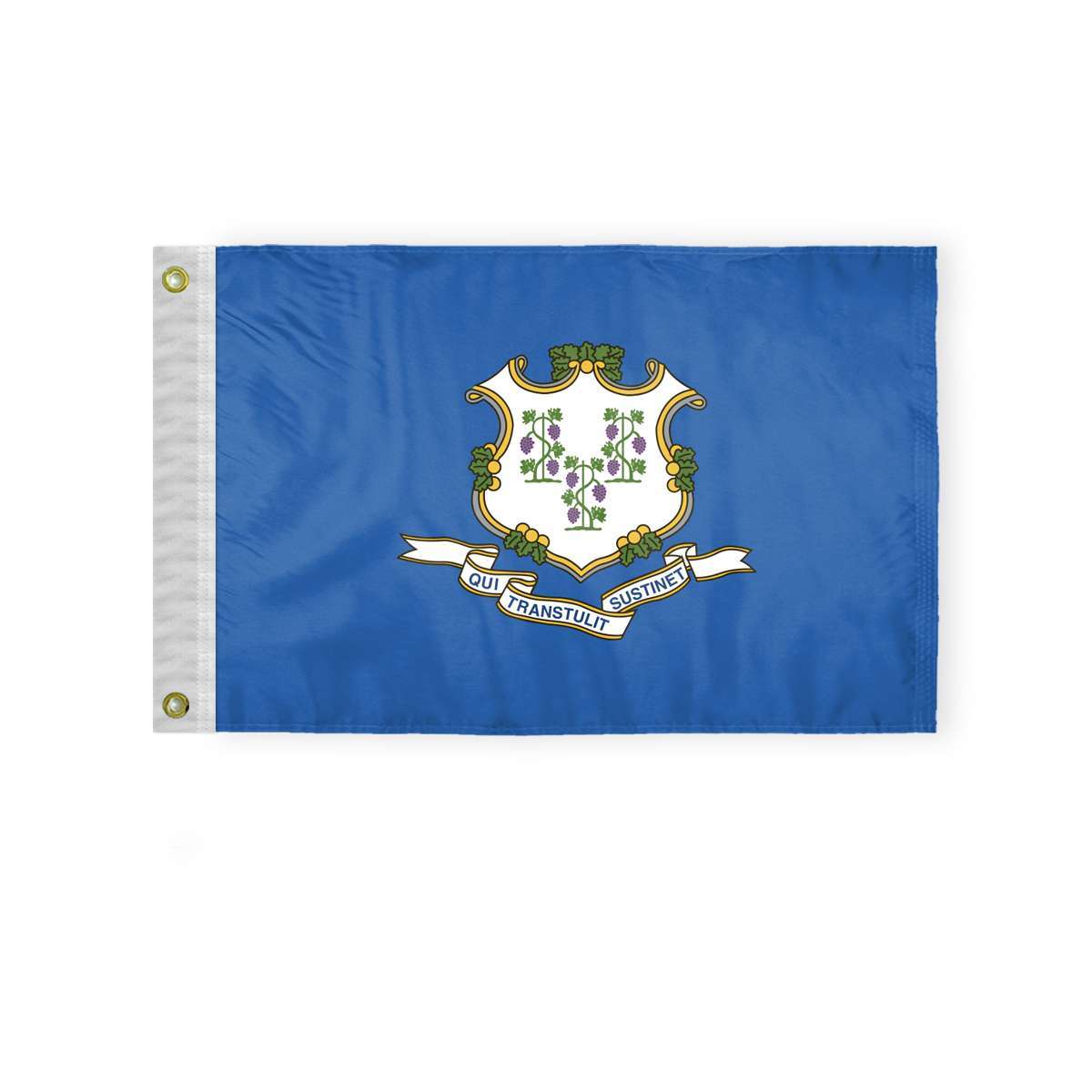
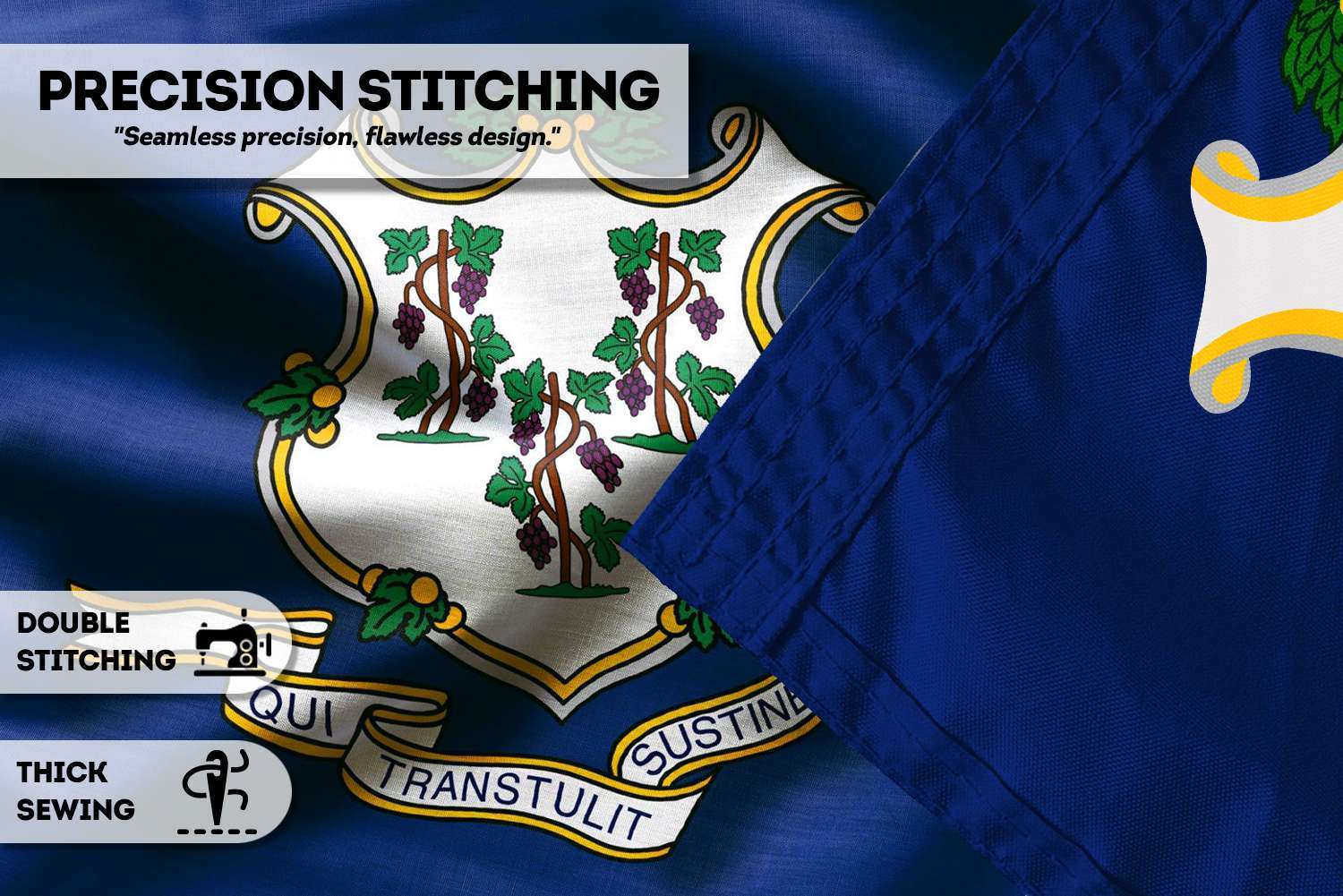
Single-sided dye-sublimation with 100% bleed-through is the nautical flag construction standard. The ink penetrates through the full nylon layer — producing a full-color Connecticut flag at natural saturation on both the face and reverse simultaneously. Not a ghost image. Not a blank reverse. On the water or on a car antenna where the flag turns in every direction, both faces carry Connecticut’s colonial blue grapevine shield at identical color intensity.
Brass Grommets — Marine-Grade
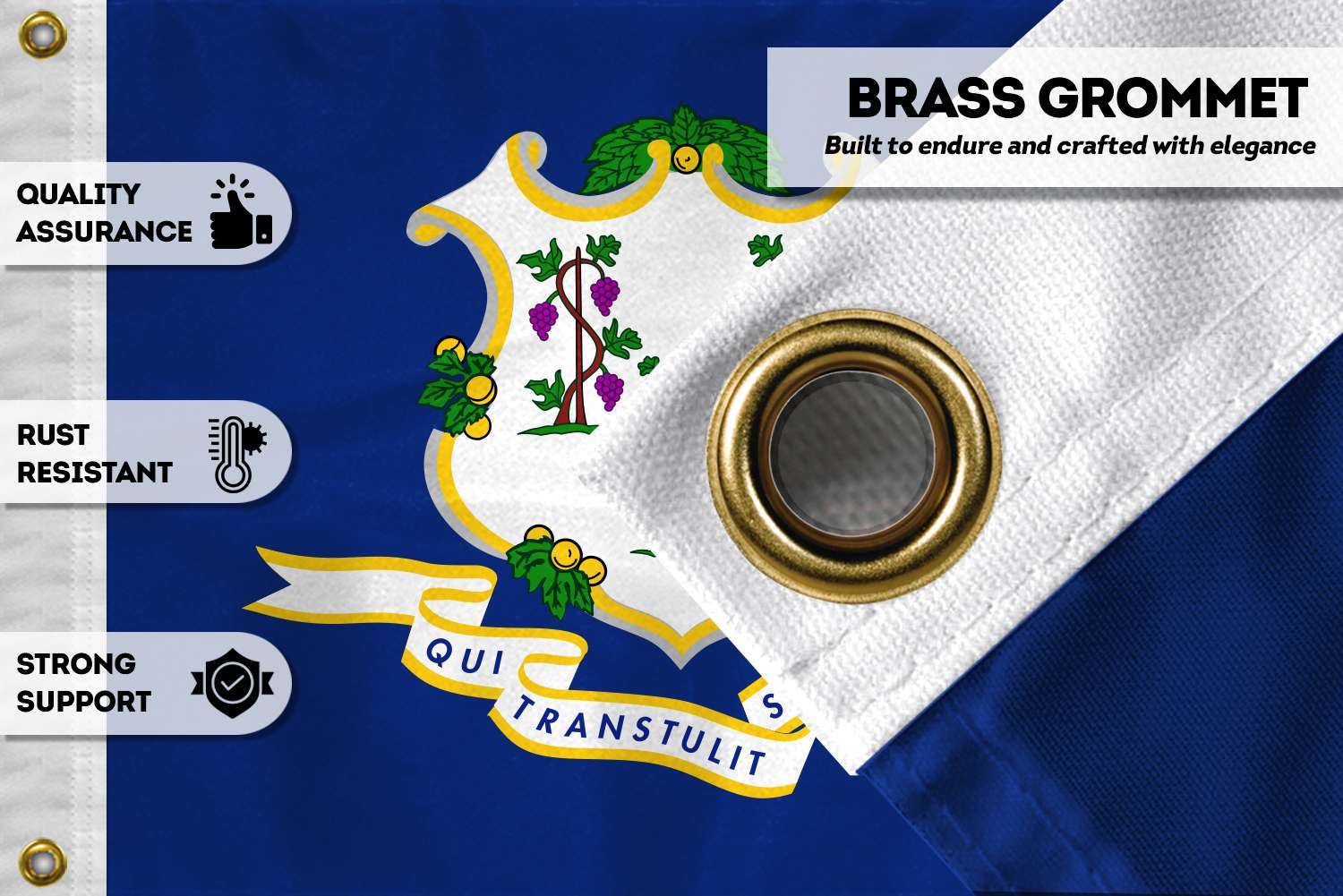
Brass is the marine hardware standard for flag grommets because it does not corrode in salt spray or freshwater exposure. Steel and zinc grommets oxidize within one Connecticut Sound season and leave permanent rust stain marks on the flag fabric at the grommet edge. Brass grommets on this Connecticut boat flag are compatible with all standard boat flag snap hooks, dock pole hardware, car antenna mounts, and kayak stern clips — and will not stain Connecticut’s colonial blue nylon over multiple seasons.
Dye-Sublimation Fade Proof
Color driven into the nylon fiber resists the combined direct-plus-reflected UV load of Connecticut’s coastal boating environment — a UV exposure load that is measurably higher than land display because the water surface reflects UV upward onto the flag simultaneously with direct overhead UV. Connecticut’s colonial blue holds deep saturation through multiple Sound and river boating seasons where surface-printed alternatives fail within a single season of reflected-water UV exposure.
Car Antenna & Window Mount
The 200D nylon and brass grommet construction handles the aerodynamic load of highway-speed car display better than printed polyester. At 55–65 mph, a 12×18 flag on a car antenna mount experiences sustained aerodynamic stress that degrades polyester surface prints and deforms steel grommets within one drive season. 200D nylon with brass grommets maintains Connecticut flag integrity at vehicle operating speeds throughout Connecticut’s highway network from I-95 to I-84.
Official Connecticut Maritime Flag
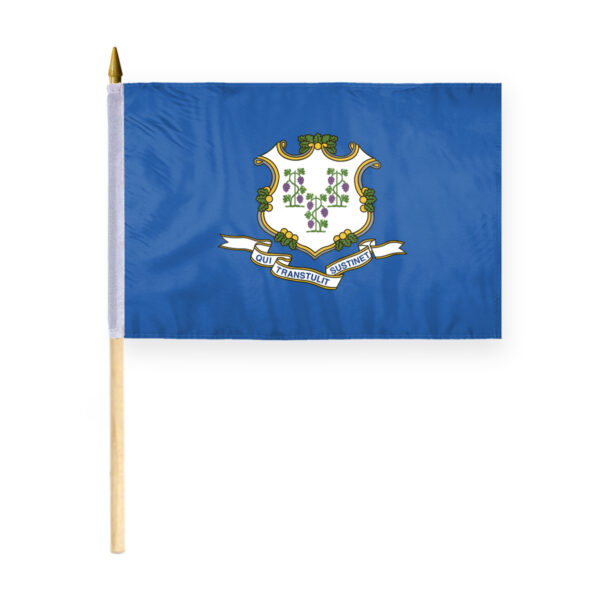
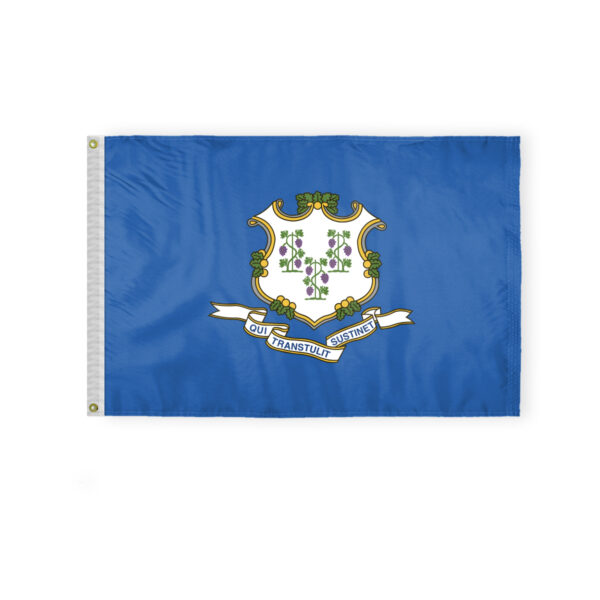
Connecticut’s 1897 colonial blue grapevine shield flag at 12×18 nautical scale — representing 390 years of Connecticut maritime heritage from the Saybrook Colony at the Connecticut River mouth to the modern boating communities of Long Island Sound. The correct Connecticut flag for vessels operating on Connecticut’s 253-mile coastline and inland waterways.
Why Choose Us
200D Nylon and Brass Grommets — The Construction Connecticut’s Water Environments Actually Require
A printed polyester flag with steel grommets on a Long Island Sound vessel is not a cheaper version of this flag — it is a flag that fades within one Connecticut boating season from reflected-water UV, loses grommet integrity from salt spray corrosion, and fails at the grommet attachment under the aerodynamic loads of coastal afternoon winds. 200D nylon and brass grommets with dye-sublimation color is the construction that addresses all three Connecticut marine environment failure modes.
200D Nylon Bleed-Through vs. Printed Polyester for Connecticut Boating
200D Nylon · Bleed-Through · Brass Grommets
- 200D nylon — UV-resistant; non-absorbent; flies in light coastal and river breeze
- 100% bleed-through — full Connecticut flag at natural saturation both faces; no ghost reverse
- Dye-sublimation — color in fiber; resists direct + reflected Sound UV across seasons
- Brass grommets — no salt corrosion; no rust staining on colonial blue nylon
- Single-layer construction — correct weight and flexibility for marine breeze performance
- Car antenna compatible — handles 55–65 mph aerodynamic load without grommet deformation
Printed Polyester · Steel Grommets
- Polyester — absorbs water; UV-degrades faster at reflected-water exposure of marine use
- Single-sided or ghost reverse — Connecticut flag appears faint or blank on reverse face
- Surface print — fades within one Connecticut Sound season from combined UV load
- Steel or zinc grommets — corrode in salt spray; rust stains colonial blue flag fabric
- Stiffer weave — does not fly well in light coastal breezes typical of Connecticut summer mornings
- Grommet deformation at highway speed — steel bends under car antenna wind load
| Feature | This 200D Nylon Boat Flag | Generic Polyester Flag |
|---|---|---|
| UV Resistance | 200D Nylon + Dye-Sub — Resists Direct & Reflected Sound UV Across Multiple Seasons | Polyester Surface Print — Fades Within One Sound Season from Reflected-Water UV |
| Reverse Face | 100% Bleed-Through — Full Connecticut Flag at Natural Saturation on Both Faces | Single-Sided or Ghost Reverse — Connecticut Design Faint or Absent on Reverse |
| Grommets | Brass — No Corrosion in Salt or Freshwater; No Rust Staining on Nylon Fabric | Steel or Zinc — Corrode in Salt Spray; Leave Permanent Rust Stains on Flag |
| Marine Breeze | Single-Layer 200D — Flies in Light Shore Breeze; Correct Weight for Coastal Conditions | Polyester Stiffer Weave — Requires Stronger Wind to Fly; Hangs Limp in Light Coastal Breeze |
| Car Antenna | Brass Grommets + 200D Nylon — Handles 55–65 mph Highway Load Without Deformation | Steel Grommets Deform Under Highway Aerodynamic Load; Nylon Tears at Grommet Edge |
| Salt Resistance | Non-Absorbent Nylon — Sheds Salt Spray; Rinse Removes Residue Without Staining | Polyester Absorbs Salt Spray; Salt Crystal Accumulation Degrades Weave and Print |
30-Day Satisfaction Guarantee
Return within 30 days for a full refund — no questions asked.
Ships Same Day
Orders before 2 PM EST ship same day — on your vessel before the Long Island Sound season opens.
Marine-Grade Construction
200D nylon, brass grommets, and dye-sublimation color — the three material specifications that address Connecticut’s Sound, river, and car highway display environments.
Official Connecticut Design
The 1897 colonial blue grapevine shield at 12×18 nautical scale — representing Connecticut’s 390-year maritime heritage from Saybrook Colony to Long Island Sound.
Care & Maintenance
Keeping your Connecticut boat flag in marine condition across multiple Connecticut boating seasons
-
Fresh Water Rinse — After Salt Water Use
After any day on Long Island Sound or Connecticut’s tidal rivers and harbors, rinse the flag in fresh water to remove salt spray and salt crystal accumulation from the nylon weave. Salt crystals that dry in the weave are mildly abrasive over time and will gradually accelerate nylon fiber wear at the flag panel surface, particularly at the fly edge where the flag’s movement concentrates abrasion. A 30-second rinse under a dock hose or garden hose with the flag still attached to the mount, or a quick submersion in the marina washdown bucket, removes the salt load before it dries. Dry the flag fully before rolling or folding for storage — 200D nylon dries quickly in Connecticut’s summer coastal air.
-
End-of-Season Wash
At the end of the Connecticut boating season — typically October for Sound boaters and November for inland lake and river vessels — machine wash on a gentle cycle in cold water with mild detergent before storing for winter. This removes accumulated salt, Connecticut River tannin staining, bird droppings, and general season grime that, if left on the nylon over the winter storage period, can set into the fiber and affect color over time. Air dry completely. Do not tumble dry. Store rolled or flat in a dry location for winter — do not store damp in a sealed plastic bag.
-
Remove During Severe Weather
Remove the flag from the boat mount before any Connecticut coastal or inland weather system with sustained winds above 30 knots or tropical storm conditions. Connecticut’s Sound is exposed to nor’easters from October through March, and tropical storm remnants can bring sustained winds of 40–60 knots to the Connecticut coast from June through November. A flag left flying during these events accumulates fly-edge fatigue within a single storm that reduces its remaining useful life significantly. Remove, bag in a dry storage sack, and re-mount after the weather system passes.
-
Grommet and Snap Hook Inspection
Inspect the brass grommets and snap hooks at the start of each Connecticut boating season and at mid-season. Look for any grommet deformation, fabric tearing at the grommet edge, or snap hook spring fatigue. On vessels that operate frequently in Long Island Sound’s afternoon chop, the constant motion of the vessel translates into repeated snap-loading on the grommet attachment points — the most common wear location on a boat flag. A snap hook that no longer clicks closed positively should be replaced immediately. A grommet that shows beginning separation from the flag fabric should be repaired with grommet reinforcement tape before the next Connecticut Sound outing.
Need the standard residential and commercial flagpole format for your Connecticut home or business? The PromoPatriot Connecticut State Flag 3×5 Ft uses the same 200D nylon and brass grommet construction at the standard outdoor flagpole scale with stitched edges for multi-season pole display.
Shop Connecticut 3×5 Ft Standard Flagpole Flag →Connecticut’s tidal Long Island Sound coastline from Greenwich to Stonington — 253 miles of saltwater, tidal rivers, and harbor approaches where the Connecticut boat flag identifies home-state vessels
Marine-grade outdoor flag standard — UV-resistant, non-absorbent, light enough for coastal breeze performance; dye-sublimation color resists combined direct and reflected Sound UV through multiple Connecticut boating seasons
Full Connecticut flag at natural saturation on both face and reverse — the nautical standard; not a ghost image; single-layer construction for light marine breeze flying performance on Sound, river, and lake
The Saybrook Colony — established at the Connecticut River mouth in 1635 — is the origin of Connecticut’s grapevine shield heraldry; flying this flag on Long Island Sound is 390 years of maritime heritage continued
Frequently Asked Questions
Everything you need to know about the PromoPatriot Connecticut State Boat Flag 12×18 Inch
Single-sided with 100% bleed-through is the nautical flag construction standard, and it is the better construction for boat flag applications for two specific reasons. First, weight and flexibility: a double-sided flag sandwiches two layers of fabric together, which doubles the weight and stiffness of the flag panel. On a boat or car mount, a heavier and stiffer flag panel requires more wind to fly and does not stream correctly in the light coastal breezes of a Connecticut summer morning — it hangs limp when the wind drops below the threshold needed to move the extra mass. A single-layer 200D nylon flag begins flying in lighter breeze because it has less mass to move. Second, the 100% bleed-through construction produces a full-color Connecticut flag on both faces simultaneously, from a single print pass. The dye-sublimation ink penetrates through the entire thickness of the single nylon layer, so both the face and the reverse show Connecticut’s colonial blue and grapevine shield at identical saturation. This is not a ghost image — it is a full-color Connecticut flag on both faces. The difference between 100% bleed-through and a lesser bleed percentage is that 100% bleed means the full color saturation penetrates completely; a lower bleed percentage produces a slightly lighter or translucent image on the reverse. For a boat flag that will be seen from all directions on the water, 100% bleed-through single-layer construction is the correct specification.
Yes. The 200D nylon construction and brass grommets are specifically the correct specifications for salt water use. 200D nylon is non-absorbent — it sheds water rather than absorbing it, so salt spray does not saturate the fabric and accumulate salt crystals in the weave the way polyester does. Nylon is also UV-resistant and does not degrade under the combined direct-plus-reflected UV load of an on-the-water environment. The brass grommets are corrosion-proof in salt spray — brass does not oxidize in the salt air and salt water environment that Connecticut Sound boating creates. Steel or zinc grommets corrode within one Connecticut Sound season, leave rust stains on the flag fabric, and can seize against snap hooks making flag removal difficult. For Long Island Sound use, the rinse protocol after each day on salt water (described in the Care section) extends the flag’s service life. For vessels kept in Connecticut Sound marinas year-round rather than seasonal use, remove the flag during winter haul-out periods and store it dry. The flag is not designed for continuous year-round exposure in a Connecticut Sound marine environment without periodic care.
The standard powerboat stern pole mount for a 12×18 boat flag uses a 12–18 inch fiberglass, aluminum, or carbon fiber flagpole inserted into the stern flagpole socket. The pole is typically 3/8 inch to 1/2 inch diameter and has one or two snap hooks at the top. For a two-snap-hook pole, attach the top brass grommet to the upper snap hook and the bottom brass grommet to the lower snap hook. Adjust the tension between the two snap hooks until the hoist edge of the flag hangs vertically — if the bottom snap hook is too low, the flag will hang at an angle; if it is too high, the flag will be compressed and will not fly cleanly. The flag should be oriented with Connecticut’s colonial blue field facing outward from the stern, with the grapevine shield centered and upright. On center console powerboats operating on Long Island Sound, the stern flag is visible to vessels overtaking from behind — which is how vessel operators approaching from astern identify your home state registration area. If your stern socket is a single-point ball or fixed mount rather than a pole with snap hooks, you can use a cord tied through the grommets to secure the flag to the mount point. Check the Connecticut DEEP boater registration requirements for any display regulations applicable to state flags on Connecticut-registered vessels.
Yes, and this is one of the primary use cases for the 12×18 boat flag format. The 200D nylon material and brass grommets make this flag the correct construction for car antenna and window mount display, which is aerodynamically demanding in a way that the printed polyester stick flag is not. At 55–65 mph highway speed on Connecticut’s I-95, I-84, or Route 1, a flag on a car antenna experiences sustained aerodynamic force that causes rapid grommet deformation on steel-grommet flags and rapid surface print degradation on polyester. The brass grommets on this flag do not deform under the aerodynamic load of normal highway driving. The 200D nylon is flexible enough to stream at low speed and strong enough to sustain the tensile load of highway speed without tearing at the grommet attachment. Most car antenna mounts for 12×18 flags use a clip or loop attachment through the top grommet for a single-point mount, allowing the flag to stream freely from the antenna. The 100% bleed-through construction means the flag displays Connecticut’s colonial blue on both faces as it rotates and flutters at speed — correct for an attachment that does not hold the flag in a fixed orientation. Remove the flag before driving at speeds above 65 mph on Connecticut highways to preserve the grommet attachment points.
For a Connecticut Sound boating season that runs approximately May through October — with the flag flown on the vessel during active use and removed during storage, winter haul-out, and severe weather — expected service life with proper care (salt rinse after each salt water use, mid-season and end-of-season wash, severe weather removal) is 2–4 Connecticut boating seasons. The primary end-of-life indicators are fly-edge fraying from the cumulative aerodynamic fatigue of Sound coastal afternoon winds, and gradual color softening from the season’s total UV exposure. The brass grommets and 200D nylon typically outlast the flag’s color and fly-edge structural life — meaning the flag will show color softening or fly-edge wear before the grommets or nylon body fail. For vessels kept in Long Island Sound marinas on a mooring or dock with the flag flying continuously rather than only during active use, service life is shorter — plan for 1–2 seasons with continuous display. Inland lake use (Candlewood, Bantam) without salt exposure typically produces service life at the longer end of the 2–4 season range.
Return within 30 days in original, unused condition for a full refund — prepaid return label provided. Defects in print quality, nylon construction, or grommet installation replaced free within 30 days — no return required on defective items. Normal wear from Connecticut boating season use — gradual color softening from season UV exposure, fly-edge stitching wear from coastal wind cycling, minor nylon surface texture change from salt exposure — is expected product aging from regular use and not a manufacturing defect. Damage from display during severe weather events is not covered under the defect replacement policy.
 USA American Printed Flags
 USA Embroidered American Flags – Cotton
 USA Embroidered Ceremonial Flags With Gold Fringe
 USA American Printed Stick Flags
 USA American Patriotic Flat Flags
 USA Pleated Fan Flags
 USA Garden Flags
 USA Toothpick Flags
 USA Streamers
 USA Pull Down Flags
 USA Windsocks
 USA American Car Flags
 USA Official Sizes Embroidered Flags
 Alabama
 Alaska
 Arizona
 Arkansas
 California
 Colorado
 Connecticut
 Delaware
 District of Columbia
 Florida
 Georgia
 Hawaii
 Idaho
Idaho Indiana
 lowa
lowa Illinois
 Kansas
 Kentucky
 Louisiana
 Maine
Maine Maryland
 Massachusetts
 Michigan
 Minnesota
 Mississippi
 Missouri
 Montana
 Nebraska
 Nevada
 New Hampshire
 New Jersey
 New Mexico
 New York
 South Carolina
 North Carolina
 North Dakota
 Ohio
Ohio Oklahoma
 Oregon
 Pennsylvania
 Puerto Rico
 Rhode Island
 South Dakota
 Tennessee
 Texas
Texas Texas Sewn
 Utah
Utah Vermont
 Virgin Islands
 Virginia
 Washington
 West Virginia
 Wisconsin
 Wyoming
 Air Force
 Air Force Retired
 Coast Guard
 Coast Gaurd Retired Flags
 Navy
Navy U.S. Army
 U.S. Army Retired
 Support Our Troops – Camou
 Support Our Troops – Yellow
 Prisoners Of War Flags -Black
 Prisoners Of War Flags – Red
 Special Military Flags
 Civilian Flags
 4X6 INCH Mini Racing Stick Flags
 24X30 INCH Racing Flags
 30X30 INCH Checkered Racing Flags
 Checkered Premium Car Flags
 Calico Jack Reckham Pirate Design
 Classic Jolly Roger Pirate Design
 Henry Every Pirate Design
 One Eyed Jack Pirate Design
 Pirate Hat Design
 Buddhist Flags
 Christian Flags
 Episcopal Flags
 Islamic Flags – Black Seal
 Islamic Flags – White Seal
 Israel- Zion Flags
 Jesus Fish Flags
 Lutheran Rose
 Methodist Flags
 Papal Flags
 Presbyterian Religious Flags
 United Church of Christ Flags
 Bow Pennants
 Code & Answering Pennant
 International Maritme Code Flags
 Message Flags
 Nautical Officers Flags
 Novelty Boat Flags
 Number Pennant
 Substitute Pennants
 Yacht Flags
 Numbered Golf Flags -Black Text On Yellow- Tube
 Numbered Golf Flags -Red Text On White- Tube
 Numbered Golf Flags -White Text On Red – Grommet
 Numbered Golf Flags -White Text On Red – Tube
 Plain Golf Flags With Grommets
 Plain Golf Flags With Tube
 Semaphore Golf Flags -Numbers 1-18 – Tubed
 14X18 INCH Golf Direction Flags
 12″X18″ – 19th Hole Golf Flag
 Ecology Flag
 Blue Peace Flag
 15′ Universal Peace Streamers
 Earth Flag
 American Peace Flag
 Embroidered Peace Symbol Flags
 Peace Symbol Flags
 4″X6″ Historical Stick Flags
 First Navy Jack
 Betsy Ross Flags
 Bennington Flag
 Gadsden Flag
 Happy Valentines Day
 St Patricks Day
 Blank Flags
 Funeral Flags
 Halloween Flags
Reviews
There are no reviews yet.